[Australian Financial Review, Jane Knight]
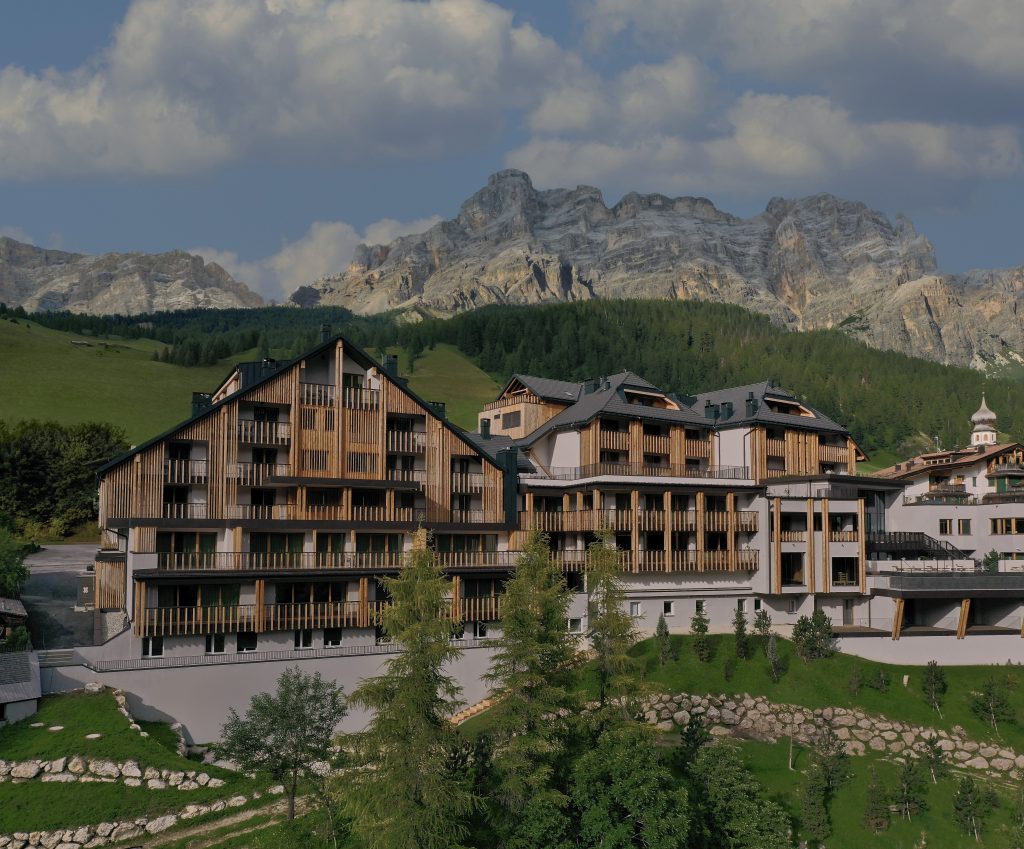
Alpine traditions run deep in San Cassiano. Geraniums tumble from chalet window boxes, a frescoed church with an onion-domed spire anchors the main street, and the jagged peaks of the Dolomites rise from pine-clad slopes surrounding farms. Even the road signs nod to history: Ladin, the region’s ancient tongue, features along with Italian and German.
This tiny South Tyrolean village of just over 850 people is the unusual setting for the most anticipated opening in the Dolomites this year. And one glance at its sleek exterior of metal and stripped timber tells you it’s no traditional mountain lodge. Welcome to the latest Aman, the uber-luxury hotel brand with 36 properties around the globe, including one in Venice, a three-hour drive away or quick hop by helicopter. Step inside and you’re immediately struck by scale and drama. Forget pine-clad interiors with carved wooden hearts in hotels handed down through the generations; this is clearly Aman territory – contemporary, minimalist and unapologetically exclusive.
Four vast tapestries greet you at the entrance, leading into a soaring, light-filled space that feels more cathedral than hotel lobby. At the far end, a six-metre wall of glass frames the slopes outside like a living mural. Seating areas cluster around a series of fireplaces, their metal chimneys climbing to a ceiling punctuated with strips of spotlights.
Everything comes in a calming palette of greys, ivories and browns, the pale textured plaster walls echoing both colour and weave of cream rugs laid over dark oak floors. The hotel’s centre of gravity, this cavernous area hums with quiet conversation by day. Come nightfall, the lights dip, the fires glow, a pianist strikes up and the bar shakes itself awake.
It’s here that I meet Hugo Pizzininni, 53, the latest link in a family chain going back to 1939, when his grandfather opened a small mountain guesthouse calle dthe Alpenrose (later the Rosa Alpina). Three generations of the famil worked hard to build what was initially a 15-room inn into a luxury retreat with a three-Michelin-star restaurant and the kind of reputation that attracted the likes of Tom Cruise and Prince Albert of Monaco.
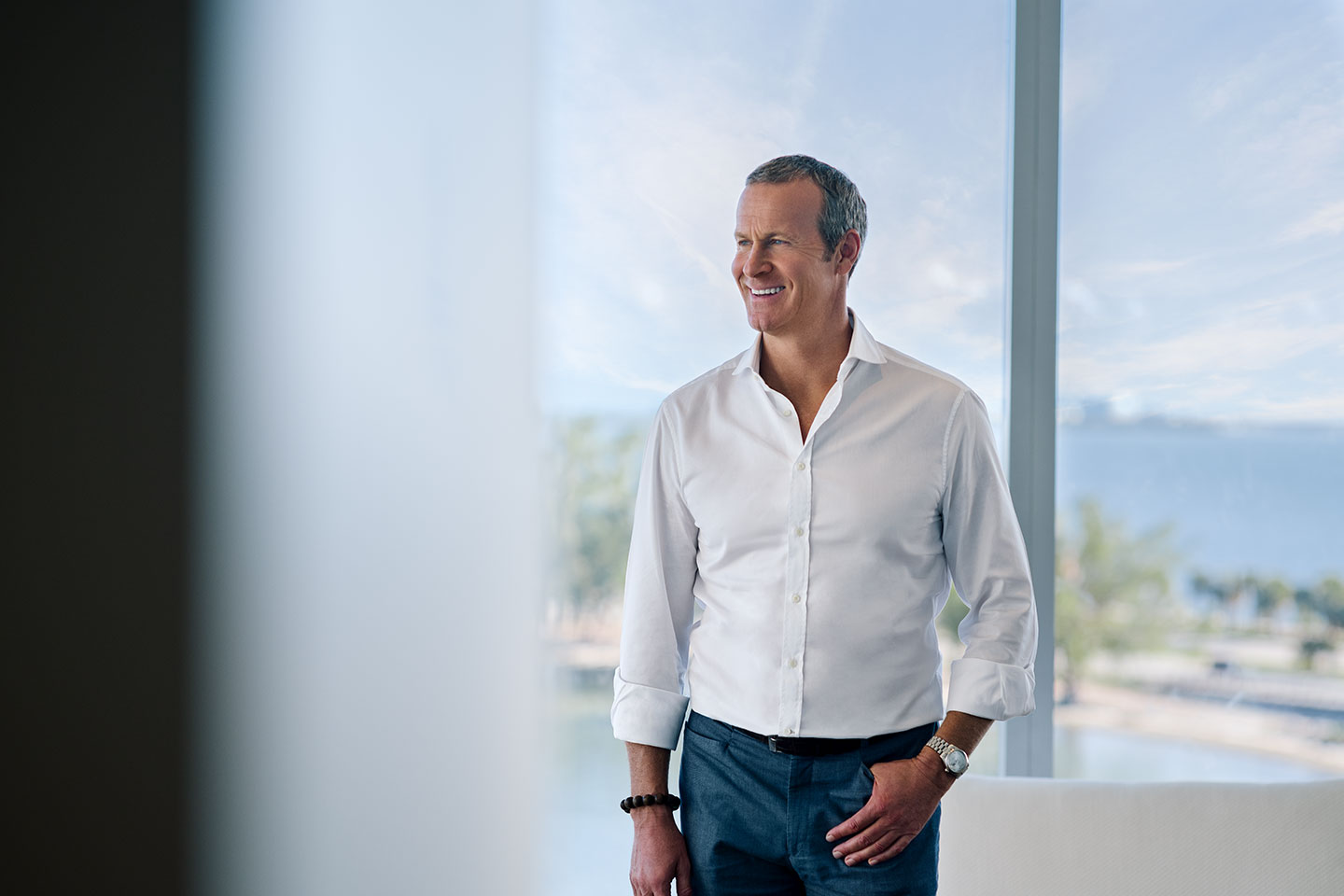
Vladislav Doronin, who owns Aman, was a guest at Rosa Alpina in 2018. “He fell in love with the hotel and said, ‘Let’s do something together’,” Pizzinini recounts. He and his wife, Ursula, 47, agreed to a partnership in which they maintained a majority stake while Aman handled the management (they politely decline to discuss finances).
The hotel remains very much a family affair: Pizzinini works as managing director, Ursula as operations director, and they live on-site with their three children. His octogenarian father, Paolo, still stops by to help every day.
The change didn’t happen overnight. First came a stint as an Aman “partner” property. Then, in March 2023, the doors shut. The old hotel came down, and in its place rose something new, designed by longtime Aman collaborator, architect Jean-Michel Gathy of renowned hotel design firm Denniston (also the go-to architect for St Regis, Capella and Mandarin Oriental). “I did shed a tear,” says Ursula. “But we had to leave the past behind without cancelling it.”
Doronin, who has another nine Aman hotels in the pipeline (including one in the Japanese ski capital of Hokkaido), felt the same way. “ we saw an opportunity to create a sanctuary that reflects both the region’s heritage and the essence of Aman,” he says.
If that sounds like marketing speak, the reality doesn’t disappoint. Those tapestries in the entrance were inspired by photographs of the Dolomites captured by Brigitte Neidermair, who funded her studies by working in the hotel’s housekeeping department in the 1990s. Upstairs, the 51 spacious rooms feature luxurious details that nod to the locality.
There are blinds operated from the bed and fireplaces that spark to life by flicking a switch – paired with wool rugs made using traditional waterproofing techniques and laid over pale oak floors. The swish bathrooms are tiled in dolomite stone, a single-line pattern etched into one wall reminiscent of the surrounding peaks.
Of course, they don’t come cheap; even the least expensive room rates have doubled in price since reopening under the Aman banner. Nor has the transformation been welcomed by everyone – Pizzinini admits to a mixed reaction from previous guests as well as San Cassiano residents. “Some say it’s too modern, “ he shrugs. “Others walk in and say ‘wow’.”
But Aman isn’t the only luxury hotel brand raising eyebrows in the Dolomites. Como Alpina Dolomites opened on Alpe di Siusi in 2023, while Mandarin Oriental is remodelling the Hotel Cristallo in Cortina d’Ampezzo (though probably not in time for the 2026 Winter Olympics, when the spotlight will hit the region full-beam). “It’s becoming a very hot place to visit,” says Pizzinini.
It’s easy to see why. Ten minutes from the hotel (or two in the courtesty shuttle), the Piz Sorega gondola whisks me up the mountain for a day’s hiking. In winter, the same lift plugs into the Dolomiti Superski circuit with its 1200 kilometres of slopes. Today, it’s a nature-lover’s playground with flower-filled meadows and rifugi (mountain huts) offering hearty meals and carafes of wine. My route takes to Pralongia, where a chapel crowns the 2138-metre hilltop, but takes twice as long as it should; the pinky-grey peaks keep stopping me in my tracks.
By the time I’m back, I’ve earned dinner. The Pizzinini’s ditche the starch of the Michelin-starred dining room, opting instead to keep the informality of the hotel’s Grill with its feather-light pizzas, bowls of pasta and juicy steaks. This winter, they’re adding a Japanese shabu-shabu for hot-pot eating around shared tables.
An appointment in the spa also awaits. I find it in a vast basement area along with a gym, separate pools for adults and families (there’s also a 20-metre outdoor infinity pool) and a series of play areas whose attractions include a climbing wall, two cinemas and a gaming room. I await my therapist in the Zen garden with its pine tree trimmed in bonsai style before luxuriating in the signature Rosa Alpina massage, with arnica applied to mountain-weary limbs.
Refreshed, I bump into 83-year-old Paolo. How did he feel about demolishing the hotel he worked so hard to create? “It’s actually the second time the hotel has been rebuilt,” he tells me. “ I knocked it down and started again in 1971. So I told my son he can do what he wants – he has my blessing.”
Judging by the polished service, the Pizzininis’ hands-on approach and the stylish rooms, plenty of guests will be blessing the hotel’s new incarnation too. Yet in this reimagined Dolomite haven, tradition still peeps through in the smallest ways. As I take my leave, two staffers are tending the geraniums outside the front door, plucking dead petals from the flowers one by one before placing them into small paper bags. It’s the same care that’s marked the hotel for generations – just dressed in modern polish.
The writer was a guest of Aman Rosa Alpina.
Read the original review on Australian Financial Review.